Sometimes you're surfing the web and you find something that really speaks to you. Lately I've been too stressed with my life pulling me in what feels like a million different directions. Check out these comics and tell me you haven't felt the same way before.
http://www.phdcomics.com/comics/archive.php?comicid=1503
http://www.phdcomics.com/comics/archive.php?comicid=1504
http://www.phdcomics.com/comics/archive.php?comicid=1505
It's good to know that I'm not the only one who feels like every second of the day I need to be either checking my cell phone or my e-mail to see what tasks needs my attention.
While I'm mentioning comics, let me mention another that I check regularly. The first is XKCD, which titles itself as, "A Webcomic of Sarcasm, Romance, Math and Language." Here are links to a few favorites of mine.
http://xkcd.com/1054/
http://xkcd.com/539/
http://xkcd.com/936/
Busy day at work so that's all I've got time for today. Will be back soon.
Thursday, July 12, 2012

Monday, July 9, 2012
“If you can’t stop the waves, go sailing.”
As promised, I’d like to take a minute to explain why
exactly I’ve decided to write this blog. If I can clearly articulate what in my
mind is a rather cloudy set of ideas, then it could be worth reading. Before I take
on that task, let me give some quick updates.
After my last post I was true to my word and set about doing
an in-room yoga workout. I was this close (makes the “this close” gesture with
his hands) to skipping the workout entirely because some friends had called and
said they just arrived at my building. Luckily there’s a little restaurant/bar
at the ground level so I told them to occupy themselves for half an hour and then
I’d join them. It felt great to get into yoga again and I learned two valuable
things. First, yoga mats are entirely underappreciated. The hard tile floor is
unforgiving, especially once you begin to sweat and you find its difficult
enough keeping yourself from sliding around, let alone following along with the
routine. Second, it will take some dedicate regaining my old flexibility. It
wasn’t until I came face to face with steps in the practice that would have one
time been easy that I realized how I’ve become, dare I say, a little out of
shape. I was discouraged for a moment, but at least I know it was possible for
me once so it’ll be possible for me again. Just have to keep at it!
I spent most of Saturday and Sunday pouring through the virtual
pages of The Year of the Flood by Margaret Atwood on my Kindle, a
quotation from which I’ve borrowed as the title of this post. It’s the second
book in a series that began with Oryx and Crake, one of my personal
favorites. I enjoyed the sequel, but not as much. Just between you and me, I was
so eager to finish the book because I’ve decided to take on the mammoth series A
Song of Ice and Fire, by George R.R. Martin, which you may recognize as the
basis for the popular HBO series A Game of Thrones. Using page count as
the simplest measure of length, the current series is nearly five times as long
as the combined books of The Lords of the Rings. I’ve got my work cut
out for me.
Now, let’s get to the real reason for the post. It’s going
to start very nerdy and we’ll just have to see where it goes from there. Do you
remember the advice Bilbo gives to Frodo early on in The Fellowship of the
Ring? I’m sure you do, but it’s copied below just in case.
“It's a dangerous business, Frodo, going out of your door," he used to say. "You step into the Road, and if you don't keep your feet, there is no knowing where you might be swept off to."
Going out the door may be dangerous, but it’s this sense of
adventure that makes it so rewarding. I’m at a point in my time in Ghana where
I’m starting to really take in all the great things about this experience. This blog is where I hope to reflect on what I'm up to. Hopefully it will survive this summer and become a regular fixture in my day-to-day life.
The other motivation for this blog comes from a desire to have a space where I can be transparent with myself and with those around me about whatever catches my interest. I've had some good moments here in Ghana to reflect upon life in general and I'm hoping that I put these thoughts together into a format that makes sense and share them on here. Right now things are in their early stages and they're likely to stay there for some time, but stay tuned and we'll see where things go.
Anyway, we've just lost power in the office so that seems like it may be my signal to wrap things up. The good news it that the generator has come on and everything is working just as it should. The bad news is that no such generator exists back in the dorm. Time to break out the ol' flashlights.
Friday, July 6, 2012
Take the long way
I’d like to introduce you to some of my friends here in Ghana.
(Mom, don’t freak out as you scroll down. I promise I have real friends too.)

First we have hand broom and dust pan. Better quality bristles than I found on brooms in Mexico, but that’s hardly relevant. I bought these items last week at the mall and have used them twice to sweep out all the dust that blows into my room. In fact, the second instance of this sweeping happened just moments ago and was the inspiration for pulling out the laptop and jotting down my thoughts. Do you know how long it takes to sweep an entire room with a hand broom? Here’s a picture of my room so you can get an idea. Not small by any means. (More on my living situation in another post.)
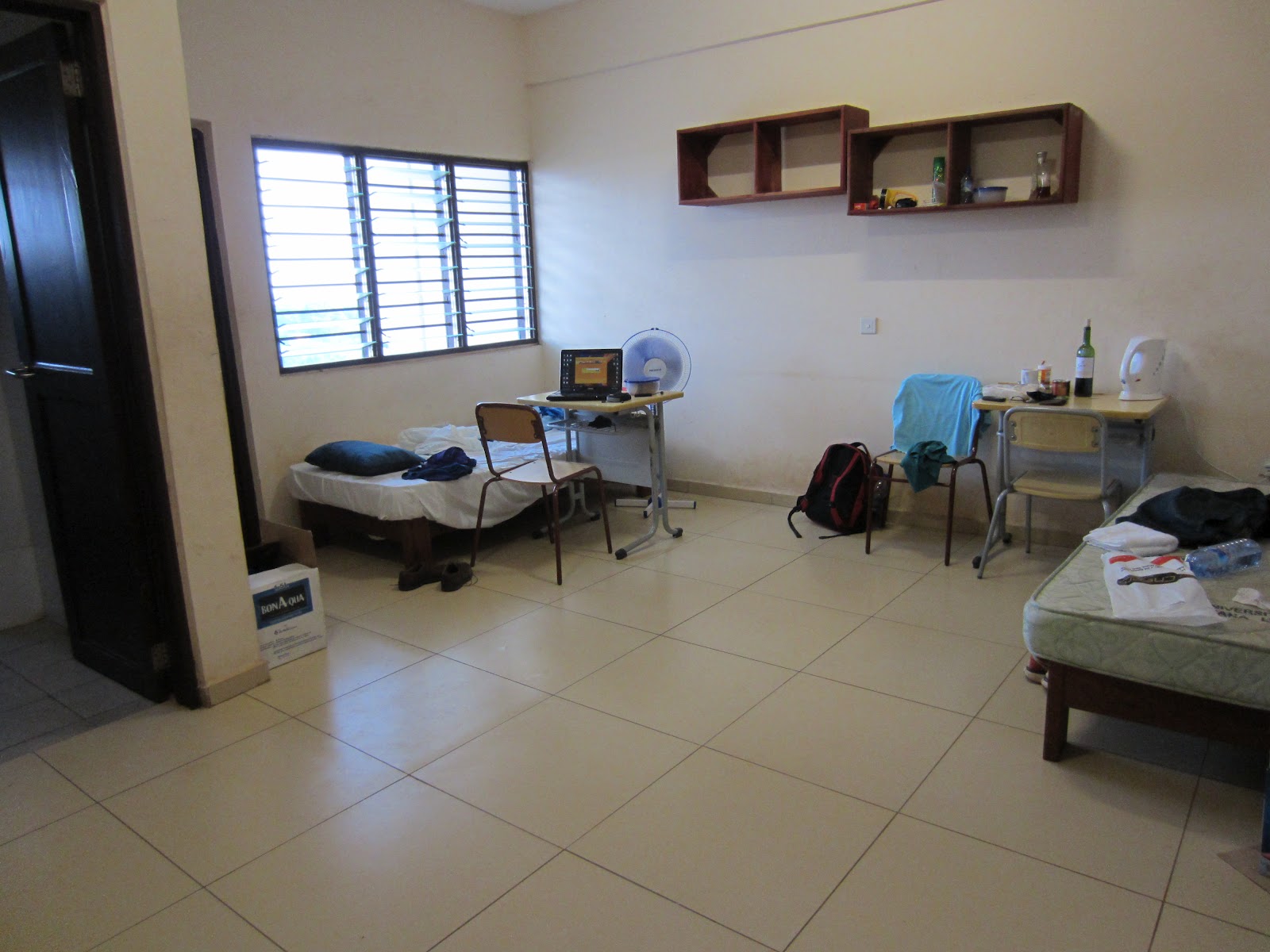
I’m sure that by any historical measurement or non-“I-grew-up-in the-USA” measurement the time that I just spent cleaning seems microscopic. For me, it provided me just enough time to get into it and actually feel connected with the floor. Now you might be asking yourself, “How much dust did he inhale that he’s now becoming one with the floor?” Something in the act of being down on my hands and knees (Did I mention it’s a hand broom instead of paying $1 more for the full size? Travel thrift is in my genes.) crawling a few inches forward after each brush really felt rewarding. Now my floor is clean enough to do yoga, which is just the plan. We’ll see how that goes.

Next we have something I’m sure you’ve all seen at some point or another so it hardly needs an introduction. If you’ve been following me on Facebook, you’ve seen my posts about how handy this little guy can be for opening wine bottles. I’m actually only 2 for 4 on that count, but I’ll share the disaster photos another time. When you look at this doesn’t it just scream, “I’m a problem solver!” In addition to helping open the odd bottle of wine, it was also instrumental in helping put together the fan you see in the above photo from my room.

Next we have a set of items that probably look familiar, but how about that razor? About two years ago I decided I was going to ditch disposable razors and switch to this little guy. It’s called a safety razor and my inspiration for it came from a section of a book titled “Shave Like Your Grandpa.” All said and done, I think I shave just as fast with this as I have with anything else and the upkeep is so much simpler. Just replace the razorblade and you’re good to go. There’s another cool thing about it, you get to deal with super sharp equipment and feel like Mr. Manly Man every time you shave.

I’ve saved the best for last. What are these? Obviously we’ve got two buckets and maybe you can identify the electric kettle, but what on earth do they have in common? Ever heard of a bucket bath? Maybe you have and I’m the only one who’s new to this. I’ll explain anyway. Every morning when I wake up, I use the little bucket to first fill the electric kettle and then turn it on. While the water is heating, I use the smaller bucket to fill the larger bucket with water from the sink. Once the water has reached a boil, you add it to the larger bucket and hope that the mixture is neither too hot nor too cold (Imagine Goldiocks picture), but there are easy fixes for that.
So why am I sharing all of this? Partially because right now, typing up my thoughts is more fun than figuring out how to do yoga on a cold tile floor, but also because these things make me feel more alive. I mean it. It’s not that any one of them is an essential cornerstone to enlightenment, but they force me to turn off the auto-pilot of my life. How easy is it to turn on the shower and hop in? And when was the last time any of us had to crawl about the floor just to keep it clean? I suppose this could provoke the natural response that we take many things for granted, but that’s not what I’m going for. I would say that we (or at the very least, I) let the conveniences of my life keep me from enjoying the inconveniences that come up. There’s got to be a moral in here somewhere, so here it is. Do something the hard way. Forget that there’s probably an iPhone app for whatever you need to do and go out there and get your hands dirty. It could be more fun than you think.
Next up: Why am I here? (Not on this planet, but at my desk typing this blog.)
Welcome!
Hi Everyone,
If you've landed here than you must have at least a somewhat passing interest in my whereabouts. This is my first post and I'm excited to be writing it. I think the is somewhat overdue, but it's better to start late than to never start at all. I intend to write this the same way that I speak, and that comes with a warning. If you've never had a conversation with me that you enjoyed, then you should probably turn back now.
For those of you who don't know, I'm spending my summer in Ghana working on a project with the Institute for International Programs (IIP) at Johns Hopkins. I have no idea exactly how much about my experience people would like to hear, so I'm just going to share what comes to my mind. If you have any specific questions or interests that you'd like me to address, let me know. For now, let's begin with a brief introduction to what I'm doing here. In fact, what I'm doing here might be jumping into the deep end before learning how to swim. First, let's look at what the overall program is doing. (It'll be more interesting anyway, I can guarantee.)
One of the key indicators for the health status of a country is the under-five mortality rate, which is measured by the number of deaths among children under the age of five per 1,000 live births. While it's called a "rate," it's more often explained as the probability of a child dying before his or her fifth birthday. Not such an uplifting idea. Under-five mortality is generally measured every 3-5 years through national household surveys, the most well known of which are the Demographic and Health Surveys (DHS) and Multiple Indicator Cluster Surveys (MICS).
The problem with measuring under-five mortality at such large intervals is that it becomes hard to use this indicator to evaluate the performance of a health program. Imagine a program targeting improvements in child health that runs from 2002-2003 but the only available on under-five mortality come from surveys for 2000 and 2005. Many changes could have occurred either before or after the program was implemented, making it particularly difficult to attribute any change in under-five mortality over the 2000-2005 period to this specific program. That's where IIP comes in.
Our program is exploring innovative methods in collecting data on under-five mortality, with the specific goal of producing accurate estimates with greater frequency than is currently the case. Ghana is just one of several countries participating in this program, which is called Real-Time Results Tracking (RRT). In Ghana, we are using community-based volunteers (CBVs) to collect information on vital events (births and deaths) within their communities on a monthly basis. They use a standard template that we have designed and submit these forms to district supervisors at the end of each month. Our goal is to explore how the under-five mortality rates from this method compare with those produced by the gold standard methods currently in use (i.e. household surveys). To most precisely gauge this, we are also conducting a complete household survey at baseline and endline for all communities involved in the project. So that's probably more than you wanted to know about what's going on here. There are interesting things to say about my role in things here, but I'll save those for another post.
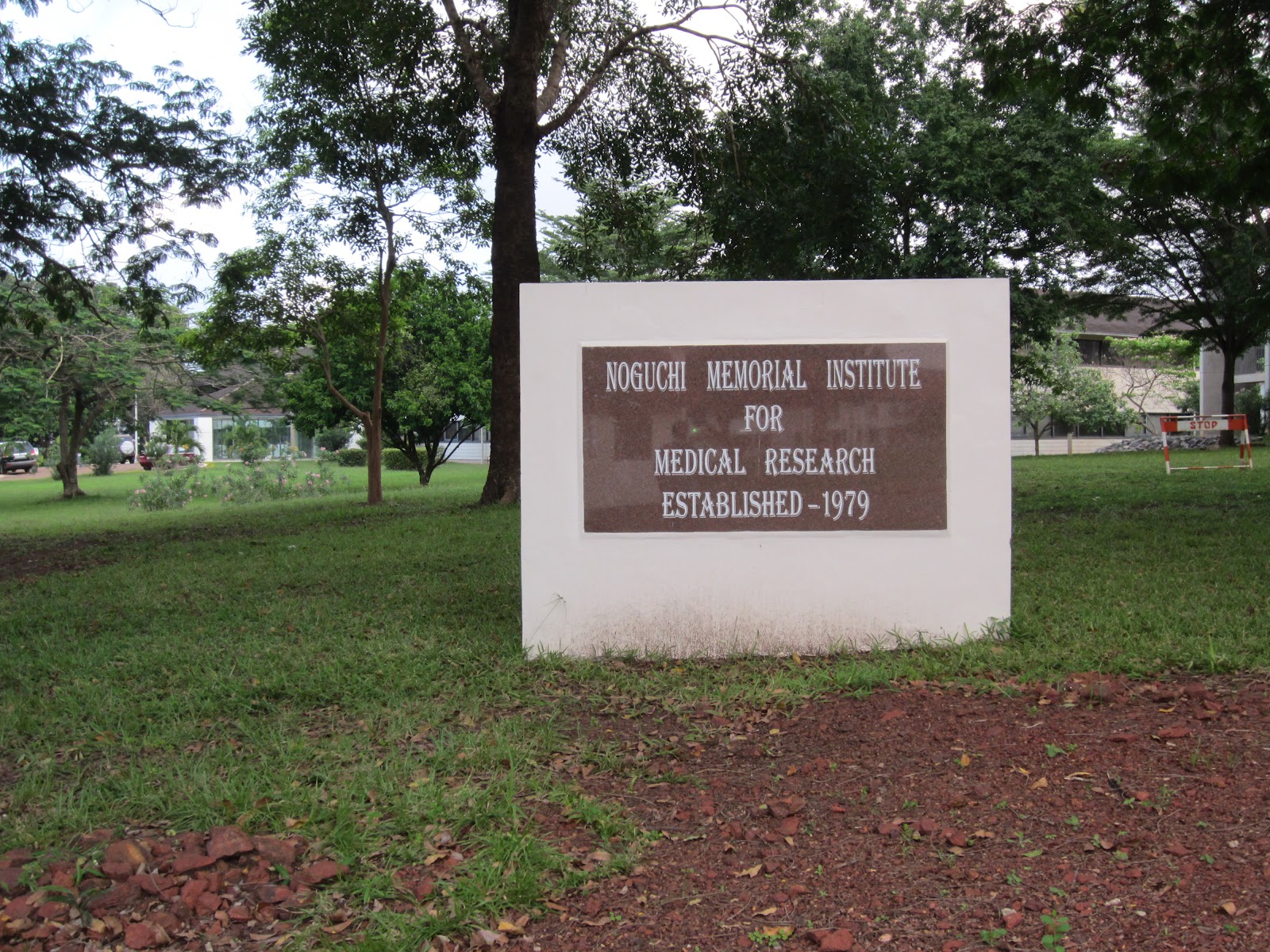
To those of you making it this far, thanks for reading. I've included a few photos taken around the office and surrounding area. The first is of the Nuguchi Memorial Institute for Medical Research sign in front of the main building. (Is this really called a sign? I'm sure there's a better word but it's escaping me right now.) The second is a view of the Prince Al-Waleed Clinical Reserach Center, where my office is located. The final picture is of the courtyard of the same building. It's the rainy season here, which helps explain why everything is so green.
Alright, that's all for now. Take care and see you guys soon.


If you've landed here than you must have at least a somewhat passing interest in my whereabouts. This is my first post and I'm excited to be writing it. I think the is somewhat overdue, but it's better to start late than to never start at all. I intend to write this the same way that I speak, and that comes with a warning. If you've never had a conversation with me that you enjoyed, then you should probably turn back now.
For those of you who don't know, I'm spending my summer in Ghana working on a project with the Institute for International Programs (IIP) at Johns Hopkins. I have no idea exactly how much about my experience people would like to hear, so I'm just going to share what comes to my mind. If you have any specific questions or interests that you'd like me to address, let me know. For now, let's begin with a brief introduction to what I'm doing here. In fact, what I'm doing here might be jumping into the deep end before learning how to swim. First, let's look at what the overall program is doing. (It'll be more interesting anyway, I can guarantee.)
One of the key indicators for the health status of a country is the under-five mortality rate, which is measured by the number of deaths among children under the age of five per 1,000 live births. While it's called a "rate," it's more often explained as the probability of a child dying before his or her fifth birthday. Not such an uplifting idea. Under-five mortality is generally measured every 3-5 years through national household surveys, the most well known of which are the Demographic and Health Surveys (DHS) and Multiple Indicator Cluster Surveys (MICS).
The problem with measuring under-five mortality at such large intervals is that it becomes hard to use this indicator to evaluate the performance of a health program. Imagine a program targeting improvements in child health that runs from 2002-2003 but the only available on under-five mortality come from surveys for 2000 and 2005. Many changes could have occurred either before or after the program was implemented, making it particularly difficult to attribute any change in under-five mortality over the 2000-2005 period to this specific program. That's where IIP comes in.
Our program is exploring innovative methods in collecting data on under-five mortality, with the specific goal of producing accurate estimates with greater frequency than is currently the case. Ghana is just one of several countries participating in this program, which is called Real-Time Results Tracking (RRT). In Ghana, we are using community-based volunteers (CBVs) to collect information on vital events (births and deaths) within their communities on a monthly basis. They use a standard template that we have designed and submit these forms to district supervisors at the end of each month. Our goal is to explore how the under-five mortality rates from this method compare with those produced by the gold standard methods currently in use (i.e. household surveys). To most precisely gauge this, we are also conducting a complete household survey at baseline and endline for all communities involved in the project. So that's probably more than you wanted to know about what's going on here. There are interesting things to say about my role in things here, but I'll save those for another post.
To those of you making it this far, thanks for reading. I've included a few photos taken around the office and surrounding area. The first is of the Nuguchi Memorial Institute for Medical Research sign in front of the main building. (Is this really called a sign? I'm sure there's a better word but it's escaping me right now.) The second is a view of the Prince Al-Waleed Clinical Reserach Center, where my office is located. The final picture is of the courtyard of the same building. It's the rainy season here, which helps explain why everything is so green.
Alright, that's all for now. Take care and see you guys soon.


Subscribe to:
Posts (Atom)